Iranian Threat Actors Use Password Spraying And MFA Push-Bombing To Hack Organizations In Critical Sectors

Written by: Kathie McDonald-McClure

On October 16, 2024, the Cybersecurity and Infrastructure Security Agency (“CISA”), the Federal Bureau of Investigation (“FBI”) and the National Security Agency (“NSA”) issued a Joint Cybersecurity Advisory warning that threat actors from Iran are using “password spraying” and Multi-Factor Authentication (MFA) “push-bombing” (also called “MFA fatigue”) to gain access to organization networks and web-based applications in the healthcare and public health (HPH), government, information technology, engineering, and energy sectors.  

With password spraying, the threat actor creates a list of usernames and then tries to login to each account with a single commonly used password. If the attempt fails, the attacker moves on to a different common password and tries again until they get a hit.  Even with MFA, using a strong password in the first instance can impede a threat actor’s further attempts to gain access via MFA push-bombing.

With MFA push-bombing, the threat actor sends a legitimate user’s smartphone a large number of MFA push-notifications, hoping that the user will click on one to stop the barrage.  Once the threat actor gains access to an account, they frequently register their devices with MFA to enable persistent access to the environment via a valid account.

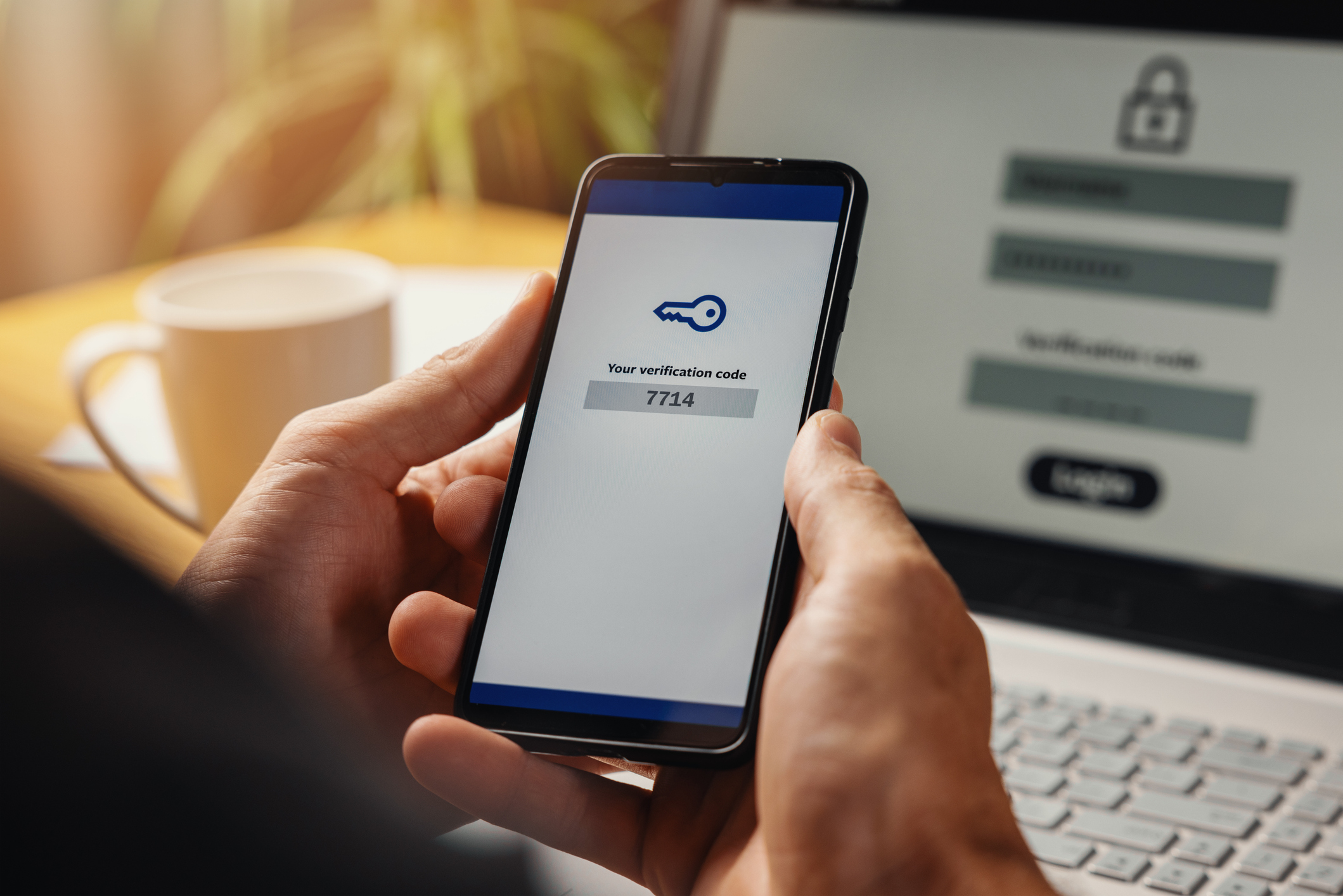
The use of MFA push-notifications to a smartphone in the absence of a second form of authentication (e.g., entering a code in an Authenticator app) is particularly vulnerable to the use of brute force and credential access.  Does your network or any of your web-based applications rely solely on a push notification to gain access?  Specifically, if access to your network or a web-based application can be gained by a mere click on a link in a SMS or email message, or by answering a call to a mobile device and there is no second method of authentication before permitting access, talk to your IT team or the vendor of the web-based application about strengthening the authentication method. 

Regularly review your password policy to ensure it is up-to-date with best practices. Ensure users in your organization are educated on the password policy.  Also, educate permitted users on the network and web-based applications on the techniques used by threat actors to gain access via weak and reused passwords. Ensure users understand the criticality of denying MFA push-notification requests that they did not generate. 

Talk to your IT team today regarding the Joint Cybersecurity Advisory on the threats to weak passwords and MFA methods. As recommended in the Advisory, implement exercises, tests and validate your organization’s security programs against the threat behaviors mapped to the MITRE ATT&CK for Enterprise framework in the Advisory (e.g., Modify Authentication Process: MFA and MFA Request Generation).

We regularly work with clients to assist in preparing or updating applicable IT information security policies and procedures. Learn more about Wyatt’s data privacy and cyber security practice by visiting the Wyatt Data Privacy & Cyber Security webpage.

CMS Issues Updated Guidance on Texting Patient Orders

By: Margaret Young Levi

On February 8, 2024, the Centers for Medicare and Medicaid Services (CMS) issued a memorandum entitled Texting of Patient Information and Orders for Hospitals and CAHs (the 2024 Memo), which provides updated guidance to State Survey Agency Directors.  This 2024 Memo now permits the texting of patient orders among members of the hospital care team—if the texting is accomplished on a secure platform that protects the privacy and integrity of the patient information. 

This new guidance updates CMS’ previous memorandum entitled Texting of Patient Information among Healthcare Providers in Hospitals and Critical Access Hospitals (CAHs) (the 2017 Memo), which permitted texting patient information if done through a secure platform, but prohibited texting of patient orders regardless of the platform utilized.

Even though texting of patient orders through a secure platform is now permitted by CMS, that does not mean it is recommended.  CMS still prefers that providers enter their orders into the medical record via computerized provider order entry (CPOE) or even a handwritten order because of concerns about medical record retention, accuracy, privacy and security, etc. as set forth in the Health Insurance Portability and Accountability Act of 1996 (HIPAA), the Medicare Conditions of Participation (CoPs), and, if applicable, The Joint Commission (TJC) standards discussed below.

Continue reading

Breach Notification Deadline is February 29th

By: Margaret Young Levi

Head’s up!  The deadline for notifying the Office for Civil Rights (OCR) of healthcare data breaches affecting fewer than 500 individuals is early this year.  Reports of small data breaches may be submitted to OCR annually, usually on March 1st, but because 2024 is a leap year, the reports are due on or before Thursday, February 29th

Continue Reading >

Scammers Target Remote Workers with Email Phishing Campaigns

By Lindsay Scott and Kathie McDonald-McClure

According to a recent USA Today article, the Federal Trade Commission (FTC) reported that it had received 83,858 fraud reports this year through August 9th relating to COVID-19 and the economic stimulus packages. Many of these fraud reports are connected to email phishing campaigns that target remote, telework or furloughed employees.

In one type of phishing campaign, scammers send emails to workers telling them that their employment is being terminated as a result of COVID-19 and purports to offer termination package options. These termination email scams provide clickable links inviting the employee to attend a teleconference meeting or to obtain additional information concerning the termination packages. Instead, these links download malicious software or require the employee to enter personal information, such as a Social Security number, in an attempt to steal their identity and ultimately commit financial fraud that harms the employee. Employees who receive a suspicious email telling them they are being terminated should notify their human resources department or other designated person in the organization.

Continue reading

Update to “Ten Easy Cyber Security Measures to Add to Your 2016 List of New Year’s Resolutions”

financial institutions pic 9661402Medium(1)One of the goals of our HITECH Law blog is to start dialogue and share information and insights in the ever changing world of cyber security.  In our previous post, “Ten Easy Cyber Security Measures…”, we relayed some information from the FBI about thieves breaking into gas pumps and inserting card readers.  One of our readers sent us some additional information we are passing along, with her permission.

“Some responsible retailers have studied how criminals are getting into pumps, and those retailers have invested a lot of time and money in pump protection after delivery from the manufacturer.  Because the safety and security of our guests is of utmost importance to us, Thorntons has spent more than $1 million over the past 18 months to make our pumps more secure for our customers.  To prevent card skimming at Thorntons’ pumps, we added Continue reading